Thinking

Like a zombie he sits
In crypt-like silence
staring into space
Smoking a cigarette
Drinking coffee
Thinking

His wife
Is cooking and cleaning
Skinning her knuckles on the washboard
Bringing in firewood
As he sits in the shadows
Thinking

The bills are behind
The cupboards are bare
His wife is crying
The kids are misbehaving
As he sits in the shadows
Thinking

The kids are all grown
The boys are breaking the law
His wife is working
Cooking and cleaning
As he sits in the shadows
Thinking

The years pass by
They’re both old and gray
His wife is lonely and afraid
But in silence he lies
Between snow-white sheets
Thinking

He closes his eyes
He breathes his last
Leaving only behind
Fragmented memories of a man
Sitting in the shadows
Thinking


This Too Shall Pass

When life gets tough, the tough get tougher, and tougher, and tougher . . .

My mother had this saying; she had lots of sayings. But this one always stuck: You can get used to hanging if you hang long enough.

Maybe it’s true, I never tried it.

What does it mean anyway? Because there are just certain things in life I can’t get used to, no matter how long I hang. No matter how long I beat and bang against it. If it hurts, I want it gone. NOW!

My husband is battling PTSD. He still cries for his shipmates that died in the fire aboard the USS Forestall fifty-six years ago. He still hears the screams and sees the charred bodies that he put in body bags. And he still feels guilty because he survived while so many others died. Survival’s guilt they call it. But they never tell you how to erase it from your mind.

The fresh-out-of-college psychologist Buck saw week after week thought she had it all figured out. Her theory was that if he kept going back through the flames and reliving that hellish day over and over again that he would eventually get used to it. That, poof! The nightmares and anger, rage, and depression would all disappear. But, her hanging theory didn’t work. The noose only tightened tighter around his neck.

Today, five years later, his PTSD has gotten progressively worse. Some days, I don’t even recognize my husband of fifty-one years. He’s a stranger. Mean and argumentative. And I don’t like him; that monster he suddenly turns into.

War breaks out in our house often. A vicious war that neither of us can win. Between my emotional madness and his angry episodes, we attack each other as if fighting a ferocious enemy. It’s like the real us stands outside our bodies, watching and wondering who the heck those two crazy people are!

Maybe this is the part where if we hang long enough we’ll get used to it.

Never! This is the part where we pick ourselves up by the bootstraps and work on fixing it. We’re tired of fighting. We’re tired of hurting each other and crying and begging for each other’s forgiveness. We’re tired of broken promises, of trying so hard and failing over and over again.

Buck’s seeing a psychiatrist, now, and I’m in cognitive therapy to get a grip and a better understanding of this ugly thing inside me called Borderline Personality Disorder.

We will get through this because we love each other. And we talk things out. We bare our souls; those raw, shameful parts of ourselves that we only share with each other.

Yes, it hurts, and we’ve been going through this for too long. And what makes it worse for Buck is that for years he blocked out the pain in his work and family and church and fishing and playing ball. He was young and strong and healthy. And now, he’s not. Now, he’s retired with mental and health issues that require lots of weekly visits to the VA.

Our world as we knew it has been turned upside down. Maybe this is all part of getting old. Maybe my expectations were set too high, and I was foolish for even thinking there is such a thing as the golden years. I don’t know. I just know that we’re going through a rough season right now, and we will have to ride it out. Because, as my mother used to say: This too shall pass.

Continue reading “This Too Shall Pass”

Take Up Your Mat and Walk Like a Boss

So, I’m paralyzed. Been this way since the car accident. I can’t walk. I can’t feed myself, bathe myself, even brush my own teeth. And this Man comes to me and asks, “Do you want to get well?”

And with a big, pearly white-toothed smile I say, “No. I’m good. I like people waiting on me hand and foot. I like using my handicap as a crutch. I like not having to do anything, prove anything, take responsibility for anything. I like people coddling me, making excuses for me, doing everything under the sun for me.

Of course, this ridiculous scenario is just fiction. I’m physically healthy. I can clean my own house, pull weeds from my flowerbeds, even walk around the block a few times.

But the man Jesus approached at the healing pool had been an invalid for thirty-eight years, and Jesus asked him, “Do you want to get well?” (John 5:6) 

Why would Jesus ask such a question? Why would He even think that the man wouldn’t want to be healed? He was at the healing pool, wasn’t he?

As a snotty-nosed kid, and seeing the world through my over-sized rose-tinted glasses, I often wondered about that scripture. Then, when I grew up and those glasses got punched off my face, I saw the world and the people in it differently. I even saw myself differently.

Reality stinks. It rattles our brain and makes us see things about ourselves and others that we’d rather not. Don’t open my eyes, and I won’t have to see how many people use their long-time physical and emotional handicaps to bully and control others. Stick in a pair of earplugs and I won’t have to hear their never-ending moans and groans.

It’s funny how conversations often become a contest of who had the most surgeries or take the most pills or has the worst ailments or suffers the most pain.

Why do people do that?

As kids growing up, my brother and I had rheumatic fever, but Kenny’s was more severe than mine. He was sickly all the time, in and out of the hospital and pumped full of penicillin at the least sign of a cold. He cried a lot. Was coddled and babied a lot. And I felt ignored a lot.

Then, when I was in the third grade, I got deathly sick every day after lunch and laid my head on my desk trying not to throw up all over the floor. Finally, mom and daddy took me to the doctor to discover I had walking pneumonia.

Finally! I was one up on my brother and rubbed it in his face, boasting that I was the sickest, now, and it’s my turn to get all the attention!

But, Kenny wasn’t having it and argued that he was still the sickest. After dragging mom into it, she finally ended the contest by calling it a tie. We were both equally sick.

For many years I expected people to treat me with kid gloves because of my out-of-whack emotional disorders. I relied on others to do things for me that I was afraid of doing myself. I relied on my loved ones to protect and defend me, to be there for me, to boost my confidence, to validate and make excuses for me. And the more I relied on others, the more dependent I became.

Then, hearing my desperate cries at the healing pool one day, Jesus knelt beside me and whispered, “Do you want to get well?”

When the prison doors swung open, I just stood there gazing wide-eyed into the vastness of freedom. It was scary out there without my crutches —- those emotional handicaps I so desperately clung to for so long. The smell of freedom was alluring and sweet, but stepping into it was like jumping out of an airplane without a parachute.

I still rely on the love and support of my family, but I don’t expect them to sit and hold my hand twenty-four hours a day, not that I ever did. I don’t expect them to make up for everything I lost throughout my life. I don’t expect them to coddle and pamper me and agree with every single thing I do or say.

Just as God has set me free, I set others free. I know what it’s like to be bullied by someone else’s handicaps, and I’d rather cry alone in the coldest, darkest cave than to ever do that to the ones I love.

Freedom always comes at a cost, especially if you’ve been enslaved for a long, long time. In order to gain one thing you have to let go of another and another and another, whatever tattered rag you’re clinging to because it feels reliable and safe.

And as crazy as it seems, many people would rather lie around sucking on their emotional pacifiers than get off their pity pot and walk.

I don’t want to be one of those people. I want to get well. I want to be what I was created to be. I want to take up my mat and walk like a boss!

When Jesus saw him lying there and learned that he had been in this condition for a long time, He asked him, “Do you want to get well?” John 5:6

Never, Ever Quit!

My son gave me permission to share this. He is a strong leader in our family and puts his heart and soul into everything he does. He never complains. He never feels sorry for himself. He never quits. But today, he is feeling very discouraged. He has MRSA. Not just one pustular bump, but twelve; the worst case his doctor has ever seen.
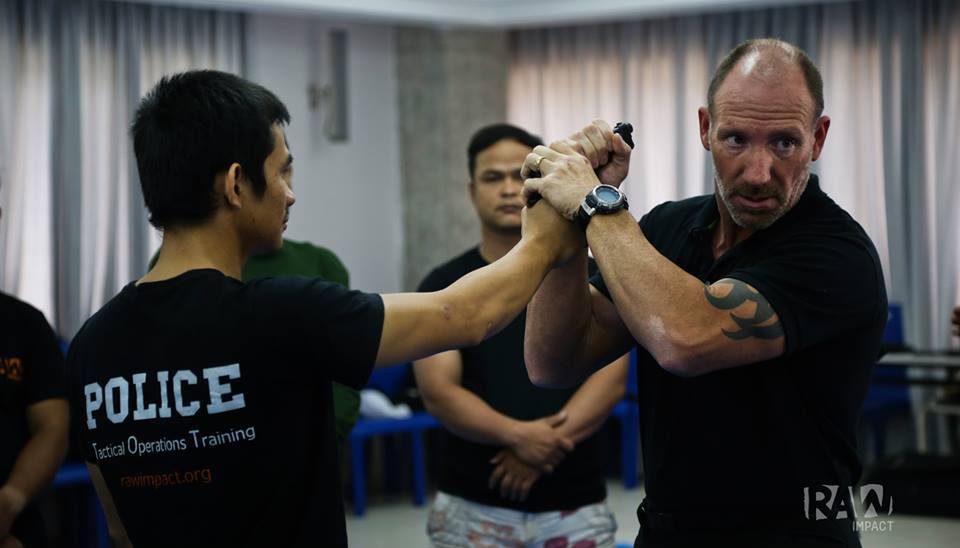
So this is what he shared with the family today:

Hey family, hope you all are doing good.  Just sharing my heart about not quitting. 

First, there is no failure in being tired, exhausted, having difficulty accomplishing a task, event, or mission and feeling like giving up or quitting.  Failure is simply quitting when you know you can do and endure more, but you trade short-term relief for long-term regret.  Quitting is the acceptable norm for our modern, mentally weak, soft, and sensitive culture–Christians included. 

I’ve trained for nearly an entire year for the GORUCK Selection. https://www.goruck.com › I have pushed my body and mind into very dark places filled with short-term pain in hopes to develop a greater threshold for the pain and suffering ahead–not just for GORUCK, but for life. 

Honestly, there have been two occasions I have felt like quitting and not attempting Selection due to all my travels and the recent infection with MRSA.  I can quit and my family will think no less of me.  My culture would say, “It’s  okay, you had good intentions, there’s always another time.”  I can quit–my body is constantly sore, at times I can barely walk, I don’t always feel like doing a 3-4 hour routine.  Sore.  Tired.  Beat down.  Mentally fatigued. 

So why do the event to begin with?  Why put myself through that much pain?  Simple:  I said I was going to do it no matter what when I registered for the event one year ago.  No matter what happens.  No matter what obstacles surface.  No matter how plausible it may be to quit.

What’s at stake if I quit now?  My word, my character, my integrity, and my own personal self-respect.  For me, if I quit, what example do I set for my family and others who believe in me?  Finishing Selection is not the ultimate goal for me.  Victory is overcoming every obstacle and opportunity to quit before the event even begins. 

When confronted with the temptation to quit ask yourself “what’s at stake if I quit?”  Failure is simply quitting in the face of difficulties when you can do and endure more than you think.  We don’t need courage when things are easy  . . . we need courage when things seem impossible!!

Family, be strong!  Be brave!  Be bold!  YOU can do all things through Christ Jesus who strengthens you!  Be courageous!  Fear not!  Don’t quit–Finish the goal, the task, the dream, the event, whatever it is–Don’t give up, give in, give out, or quit!! What is at stake if you quit?  The better question is, “What potential impact does my not quitting have on me, my family, others, and the Kingdom of God? Regret or glory–the choice is yours.  And for me?  I’d rather die than to quit!


Letting Go

Parenting is a full-time job of love and patience, teaching and learning, guiding and directing. A full-time job of trial and errors, pacing the floor . . . and letting go.

From the time a mother holds her infant in her arms and holds it to her breast, the natural process of letting go begins to unfold.

At first, we don’t see it. We’re way too busy changing diapers, filling bottles, and trying to catch a few hours sleep. The mere thought of him starting first grade is a trillion miles down the road.

Suddenly, it happens. You’re not the love of his life anymore. He’s dating. He gets married. He has kids. His kids have kids. They all have lives of their own to live and enjoy and to follow the star of freedom and independence. No one has the right to interfere with that.

Unfortunately, my mother didn’t get that. To her, letting go was like cutting off her arms. I guess through her abusive childhood and failed marriages she had lost so much already that she felt she couldn’t survive losing her kids too.

So she clung to me like clinging to the edge of a cliff.

I could write a book about the emotional damage she caused, the conflicting battles and severed relationship we had and the effect it still has on me. Maybe one day my life will be what it is was meant to be, but it may never happen on this side of heaven.

That’s why I’ve worked so hard through my fears and insecurities to set my son free. Why my heart gave him permission to spread his wings and become the strong and independent man he is today. He will not be controlled, and I will never impose my will on him; to manipulate and toy with his tender emotions. To me, that is the most deadly form of child abuse. It’s emotional rape and almost impossible to recover from. I love him way too much to slaughter his spirit.

Through a river of blood, sweat, and tears of letting go, I am reaping a bountiful harvest of joy and happiness through my son, his kids, and his grandkids. And when he takes me out, which isn’t very often due to his busy and exhausting schedule, he treats me like a queen. He warms my heart and makes every moment we spend together priceless treasures that no one can take away.

For me and my twisted emotions, letting go is not easy. But I’d rather die than sacrifice my son’s emotional well-being for my own selfish desires; to try to put him in a tiny box with no room to grow. His wings are way too big and strong for that.


A Coat of Many Colors

A Coat of Many Colors

This poem came to me one quiet morning during a moment of meditation. Suddenly, across the screen of my imagination, flashed a brightly colored robe . . . a token of Jacob’s love for his son, Joseph. This robe symbolized a position of honor and esteem. I wish I had known a father’s love like that, I sighed. Suddenly, like a gentle breeze, the cloak of God’s love wrapped around me, reminding me that I am precious to Him. All the finest and brightest treasures of this world pale in comparison to God’s unfailing, unchanging, unconditional love for humankind!

With loving care and tenderness

My Father made for me

A coat of many colors

For all the world to see

He didn’t have to tell me

I saw it in His face

This coat of many colors

Must ever be worn with grace

Threads of pure gold proclaim His birth

Purple, His royal descent

Stripes of snow white and patches of blue

Proclaim His purity, honor, and strength.

And to complete His glorious masterpiece

He trimmed it all in red

Proclaiming the cross at Calvary

Upon which His blood was shed.

Father, thank you for your wondrous gift

So precious rich and free

For the coat of many colors

You have made for me

And lest in arrogance I wear your gift

Forgetting from Whom it came

Remind me of the price you paid

To cover my guilt My sin

My shame