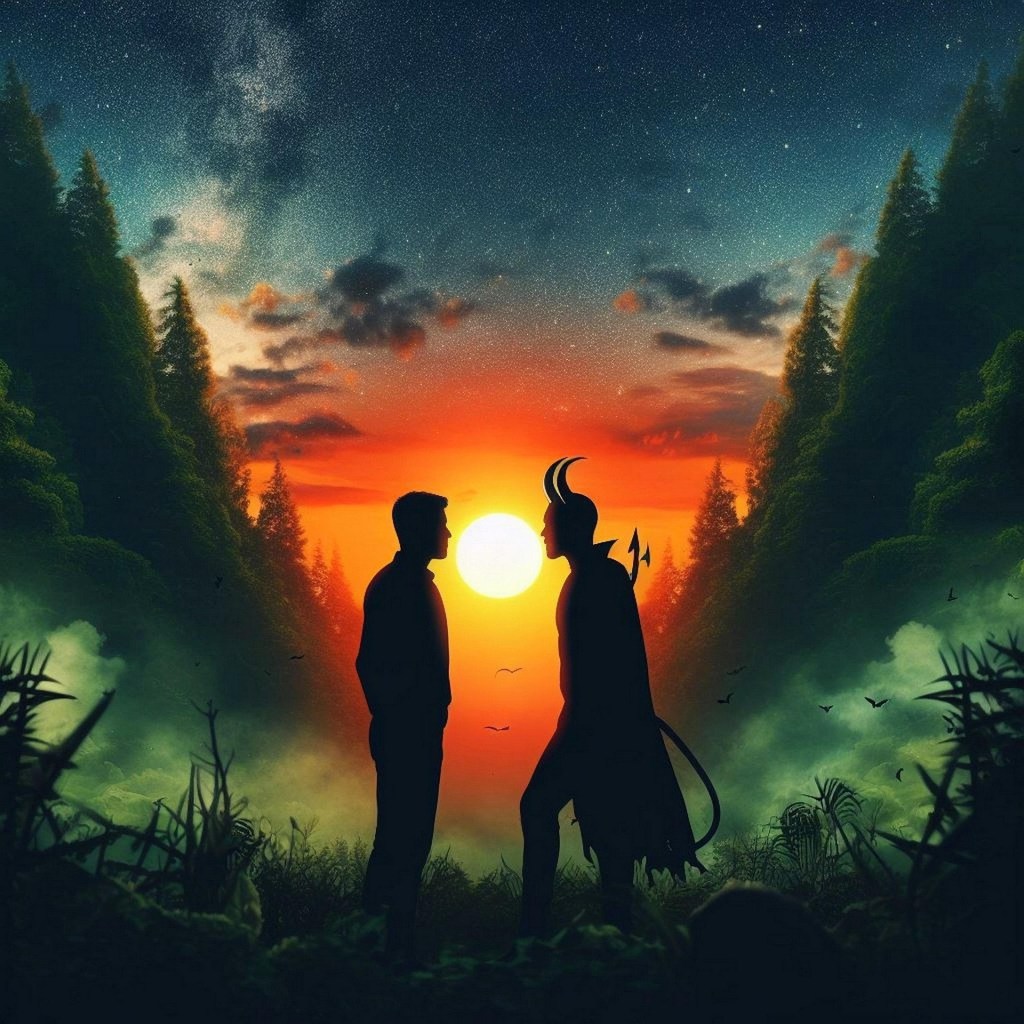
The Devil Made Me Do It!

Let’s play the blame game. No rules. No responsibility. No consequences. So easy that a child can play it.

Take my great-grandson, Gideon, for example. He was four at the time, with snow-white hair, baby blue eyes, and as hyper as a squirrel on speed.

One afternoon during a family get-together at our house, I stepped out on the deck to find birdseed scattered everywhere. And I knew, without a shadow of doubt, who did it.

“Gideon! Come here!”

Like a playful puppy, he came running to the deck.

“Did you do this?”

“No. I didn’t do that!”

“Then who did?”

“Big Bird did it!”

“Oh! He did, did he?” Then, pointing to the birdseed scattered on the back porch, I questioned, “Did Big Bird do that, too?”

“Noooo! Little Bird did it!”

The blame game. It begins in childhood and continues throughout our lives. It’s the wife’s fault that her husband beats her half to death. It’s the cops’ fault for stopping someone for driving under the influence. It’s the teacher’s fault that the student got caught cheating. It’s the woman’s fault that she got raped.

On and on it goes. Why should I get in trouble? Why should I take responsibility when I can pin the blame on someone else? Pretty soon, it becomes a destructive habit of lying, cheating, manipulation, and control beyond comprehension.

Even a Godly heart knows how to play the blame game, but never without its consequences: restless, sleepless nights, irritability, and many other forms of conviction that hopefully lead to repentance.

Blaming others is nothing short of a bald-faced lie, a coward’s way out of taking responsibility, regardless of the impact on someone else. Sadly, it’s become an epidemic in the world today. “Why should I pay when I can blame it on someone else? Why should I lose my job? Why should I stand trial and go to jail?”

Blaming others takes us all the way back to Genesis 3: 6-12 where Adam blamed God and Eve. Eve blamed God and the serpent, and surprisingly, the serpent blamed no one. His greatest mission was completed, for which he proudly took all the credit. In his gleaming arrogance, he deniably cut his own throat with God’s deadly curse, “I will put enmity between you and the woman, and between your offspring and hers; he will crush your head, and you will strike his heel (Genesis 3:15).”

Jesus, God’s perfect Son, is the woman’s offspring. Satan struck his heel through his crucifixion, and Jesus crushed his head through his death and triumphant resurrection!

Is it worth destroying someone else to save your own skin? Is it worth the consequences and the penalty for sin? Is it worth destroying your own life? Satan thought so. But in the end, God will wipe that arrogant smile off his face, strip him of all his power, and cast him into the lake of fire and brimstone where he will be tormented day and night forever and ever (Revelation 20:10).

The blame game isn’t a fun game for anyone to play. It offers no rewards and promises only sorrow and pain. Like quicksand, it slowly swallows the soul alive. It’s the game Satan invented and plays, so how can anything good possibly come from it?

Whoever conceals their sins does not prosper, but the one who confesses and renounces them finds mercy (Proverbs 28:13 NIV).
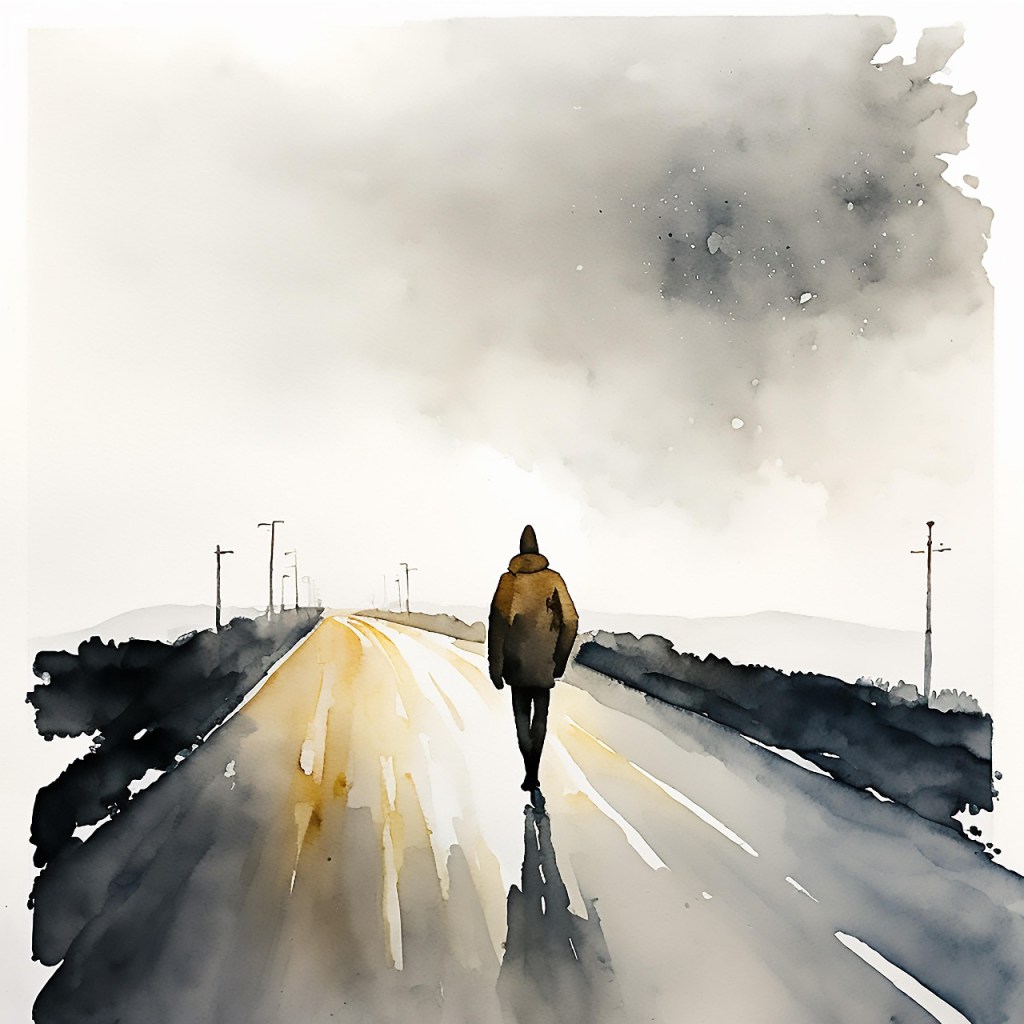
A Time to Walk Away

“I don’t know if I love you or hate you!”

Those words shot out of my mouth like a bullet as I sat confronting my mother, who didn’t even flinch. We hadn’t spoken in months. I never wanted it to come to this, and only God knows how hard I tried to hold the relationship together, to be what she wanted me to be, to make her happy, to fill the craters in her soul. But I failed. I was just a child myself, drowning in my mother’s grief.

I was her protector, her emotional empath child, easily controlled by the guilt and shame she lavishly poured on my head. When I resisted, she used scripture and religion to further shame and punish me. But I was not her golden child. I was a wounded wildcat, fighting for every morsel of my being.

But between the oppressive silent treatments, the glaring eyes, and the fragile china-doll act, I was always the one to break down and apologize. The shunning was too much to bear. Thus, the emotional mold was created. No matter how hard I tried to break it, it became more firmly set in the concrete of manipulation and control. My voice, my rights, and my life were overruled by a drunken puppeteer.

The never-ending, losing battles were as fierce as the raging fire consuming my soul. Like a corpse rising from the ashes of torment, I transformed into a monster of self-destruction.

Gone was the sweet, gentle soul I once was. My spirit was crushed beneath the heavy burden that was never mine to bear. Like falling down a flight of stairs, I spiraled into the depths of depression and despair. I’m a good-for-nothing failure, too damaged and too dangerous for anyone to get too close, lest they arouse the monster within.

It seems my mother was hell-bent on destroying my life. Of course, no one would believe that. She hid it well beneath the cloak of religion and her fragile, china-doll facade. But after two years of weekly cognitive therapy sessions, I faced the unbelievable truth: Someone had to pay for my mother’s pain, and that someone was me. I was the target. The scapegoat chosen to die beneath the corpse of my mother’s abusers.

And yet, the most agonizing thing I have ever done in my life was walking out of hers. And I couldn’t have chosen a worse time. My father had just died. And again, in her twisted mind, I was somehow responsible for her grief. I couldn’t comfort her. I couldn’t please her. I couldn’t whisk her away to another planet where she could live happily ever after. So I left her to wallow in her own pain. I couldn’t take it anymore. I had nothing left to give her but the raging monster she created in me.

Of course, no one understood why or how I could be so cold and calloused. “She’s still your mother,” church people would say. “You picked a bad time,” my sister said. And others would come to me, reporting my mother’s surprising dismay, “I don’t know what I did to make Sandi act this way.”

Through therapy and the unconditional love and support of my husband and my son, I pushed through the anguish and pain of the unconventional choice I made. Walking out on your mother is a cardinal sin. But a mother’s emotional abuse, the bloody wounds no one sees, is commendable?

After six long years, the Holy Spirit tugged at my heartstrings, compelling me to make amends. I was much stronger and wiser. She had no more power over me. I walked through the flames of destruction, empowered and refined. I can see myself more clearly now. Yet, though the monster inside me is more at ease, it refuses to die. And that remains my biggest struggle today. PTSD. It never goes away.

The relationship was as good as it could be. I changed, but my mother didn’t. She was more cautious and more cleverly subtle in her desperate need to control me. Spending too much time with her was like walking on thin ice, never knowing when it would break beneath me. Forgiving her is the glue that really held it together.

Five years later, I not only grieved her death, but also the death of my inner self. I had reached yet another confusing plateau. Who am I, now? What am I? Am I nothing more than a broken vessel, unable to contain anything good? My heart was one big blister of anger, grief, and confusion.

With her death came the ultimate betrayal, the fatal bullet through the heart and soul. In her freezing cold denial, shrouded in the smugness of death, she won. I lost. She snatched the core of my being and took it to the grave with her. The words I longed to hear will never pierce her lips: I’m sorry.

How can I live with the belief that everything wrong in the relationship was my fault? That she, the mother, was always right, and I, the daughter, was always wrong. Does the daughter not deserve respect? Does she not deserve her own voice, her own mind? Is she to remain a toddler, unable to think and choose for herself?

How can I move on from here when I don’t even know who I am anymore? How do I learn to swim through the emotional turmoil without drowning in my grief? I feel naked, stripped to the bone, for all to see my wretchedness. Nowhere to run. Nowhere to hide. Like a wild beast searching for shelter and warmth, my spirit shivers in the cold, dark, bleakness of grief.

Even with God’s help, the night can be ever so long, dark, and lonely. Without faith in his love, grace, and forgiveness, I wouldn’t have made it. Even now, I have to remind myself that just because I can’t feel his nearness doesn’t mean that he’s not there. He has walked with me through the darkest, lowest times of my life, and continues healing my recurring, festered wounds. How does anyone get through it without God?

Relationships can be wonderful, and they can be deadly. I have to remind myself that I can’t fix anyone. That’s not my job. God is the only one who can fix a broken soul. By trying the impossible to fix my mother, she ended up crushing me beyond human repair. God is the only one who has the power to restore our broken souls.

I will never remain in a toxic relationship again. I will never allow anyone to crush my spirit again. I will never tolerate anyone making me feel like a worthless piece of trash again. It’s too painful, and recovery is too long and arduous. I’ve learned to value who I am, whether anyone else does or not. I have to live in my own skin, and I choose to live in it in peace.

My grace is sufficient for you, for my power is made perfect in weakness (2 Corinthians 12:9 NIV).

Just Like His Momma Used to Make

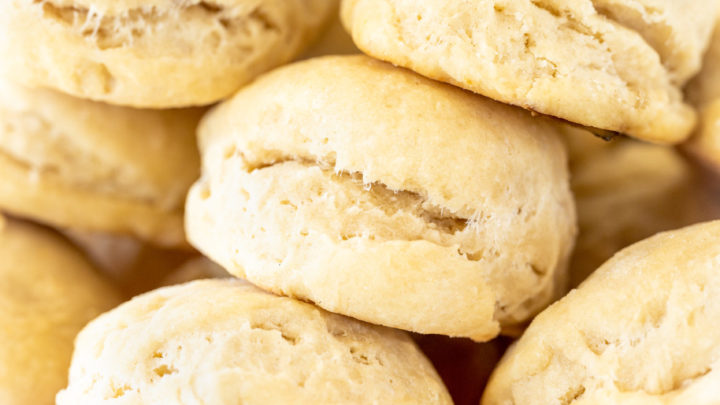
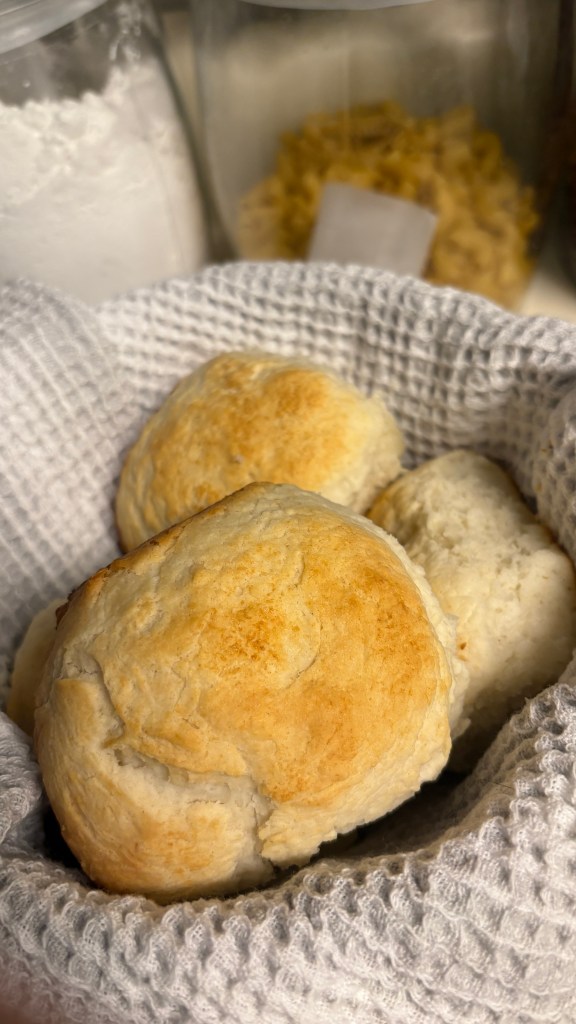
Southern melt-in-your-mouth buttermilk biscuits that I made with my own two little hands for breakfast this morning

Ever since we retired seventeen years ago, my husband has taken over the kitchen. I have to make an appointment just thinking about cooking something. And when he hears me stirring around in there, he yells all the way from outside, mowing the grass, “Get out of my kitchen!”

Funny how the roles have changed. And funny ha, ha, that he thinks because he cooks, I’m supposed to clean up the big messes he makes. Oh, no! If he wants to play King of the Castle, he has to be his own scullery maid, because I’m the Queen! That’s how it works in the Queen’s castle.

But this week, I took over the kitchen. I cooked the sausage. I fried the eggs. I made the brown gravy. And I made the buttermilk biscuits! Without creating a blizzard like he did the last time he attempted to make biscuits and dumped flour all over the kitchen.

I’m not a southerner; I’m a pure-blooded Yankee from Newark, Delaware. My mother didn’t make biscuits; she made yeast rolls. I had to eat supper at my best friend’s house to get a homemade biscuit. Her family was from South Carolina, and her mother was the Michelangelo of making biscuits.

Before my husband kicked me out of the kitchen, I learned to make biscuits. Big, fluffy, golden brown biscuits that would make a cannibal drool. Okay. Maybe that’s a little extreme.

Growing up, my mother did all the cooking, and I gladly stayed out of her way. Daddy was happy. My brothers were happy. And I was ecstatic! I cleaned the house. She cooked. That’s the way we rolled at our house.

I finally learned how to cook, though, but making biscuits was never my life’s goal. There’s an art to it, and southerners turned it into a masterpiece, at least my mother-in-law did. She’s the one who taught me, but it took a lot of practice. And when I finally learned, I made biscuits every day. I shared them with my neighbors. I shared them with my friends. I wanted to share them with the whole world!

But I had to stop making them . . . everyone was getting fat! So, when my husband took over the kitchen, I was lucky to get a slice of bread tossed across the table. You know the saying, Use it or lose it. Well, I completely lost the art of making biscuits.

But this week, like being zapped by the Energizer bunny, I kicked my husband out of the kitchen, rolled up my sleeves, and cooked breakfast every morning; biscuits and all. The first morning, the dogs laughed at my pitiful, wannabe biscuits. The second morning, they were edible swimming in gravy. The third morning, my husband’s eyes lit up like a Christmas tree. But this blessed, sacred morning, the heavenly host began singing, “Hallelujah!”

Not His Momma’s Biscuits

My husband decided to make biscuits. I decided to keep my mouth shut, a practice I don’t do very often. There’s an art to making big, fat, golden brown, flaky, melt-in-your-mouth, southern, buttermilk biscuits. Not a yearly, spur-of-the-moment thing to impress your next-door neighbor or important dinner guests.

A few minutes later, I walked into the kitchen, and thought I had entered a severe snowstorm. Flour was everywhere! On the floor. On the countertops. In the kitchen sink. I’m surprised the dogs weren’t covered from head to tail. Slowly recovering from the shockwave, I looked up, and lo and behold, there stood my husband looking like Frosty the Snowman with a smile as big as Texas.

As if he had reached the top of Mt. Everest, he said triumphantly, “Look in the oven.” I brushed the flour off the handle, slowly opened the oven door, and there huddled in the middle of the cookie sheet sat five puny little biscuits pretending to be big, fat, golden brown, flaky, melt-in-your-mouth, southern, buttermilk biscuits like his momma used to make!

Dare I Trust My Heart Again?

Dare I trust my resurrected heart?
The flickering candle of hope?
The dimly lit path to freedom?
The trickling water of peace?

Dare I trust the softer voices in my head?
The gentle breezes in my soul?
Dare I trust the raging monster is dead?
That it will never rise again?

My heart was crushed by the hammer of injustice.
Broken by ghosts of the past.
Paying for crimes she did not commit.
Drowning in tears that were never hers to cry.

It trusted the bloody hands of those who claimed to love her.
The freezing tomb of silence.
The glaring eyes of rejection.
The coals of shame poured on her head.

But dare she trust these quiet chambers?
To lay down her sword?
To tear down the walls?
Dare she believe in trust again?

No! I dare not trust my fickle heart.
My fractured mind.
My wild emotions.
My murdered soul.

I dare not trust my destructive self.
My racing thoughts.
My doubts and fears.
I dare not trust my broken self at all.

I dare to trust an unseen God.
I dare to trust His tender love.
I dare to trust His healing touch.
I dare to trust His whispering voice.

I dare to trust His wounded hands.
I dare embrace the blood He shed.
I dare believe the words He speaks.
I dare surrender to the cross.

Father, forgive my wounded heart.
My angry tears. My shattered soul.
I never wanted to hurt you.
But I was afraid to trust your stubborn love.
But I’m not afraid anymore.


Mary’s Little Lamb

Mary had a little lamb
His heart was pure as gold
And everywhere that Mary went
Her lamb was sure to go

Then before her very eyes
Her little lamb grew up
The hour had come to make his climb
And drink his bitter cup

How Mary mourned for her little lamb
She once cradled in her arms
And kissed away his every tear
And protected him from harm

In her heart she always knew
Her lamb was born to die
To save the dying world from sin
And give it eternal life

So as you kneel beneath the tree
Gathering treasures in your hands
Remember to thank our loving God
For Mary’s little lamb

The Woman at the Bar

Alone, she sits, glass half empty in her trembling hand. Her occasional visits have become a nightly ritual of total surrender to the toxic, amber liquid numbing her brain. And there, forsaken and forgotten, she sits in the dim light, mopping her tears with a soggy napkin. She’s the talk of the town, an outcast, looking for love in all the wrong places. Every bartender knows her name, but no one knows her gut-wrenching story.

She was orphaned as a young child and taken into foster care, where she was beaten, molested, and worked like a slave on the farm. Her foster mother was a demon from hell and lashed out all her resentment, anger, and rage on her tiny, frail body. She walked miles to school in the freezing cold and rain, and many times, she discovered rocks in her lunch pail instead of food.

When she wet the bed, her foster mother would hang the stained wet sheets out her bedroom window for everyone to see. She had no friends. No voice. No one to dry her tears in the dark and lonely nights.

When she was finally old enough to leave the foster home, she found her estranged family, who lived nearby. But it was not a happy reunion. Again, she met with danger in the filthy, greedy hands of her alcoholic father and one of her ten brothers. Betrayal of the worst kind; unwanted, unprotected, unloved. That’s the badge she wore on her heart that never aged with time.

Barely in her teens, she fell in love with a handsome, blue-eyed Romeo and gave him her body, heart, and soul. But when she got pregnant with his child, he slammed the door in her face. She wasn’t good enough, pretty enough, smart enough. Neither he nor his family wanted anything to do with her or the baby girl she carried.

Months later, she married a man who claimed to love her, and despite having given him two sons, she didn’t love him. He began drinking, sleeping around, and contracted a sexually transmitted disease. So she took her three children and left him. But her troubles were far from over. Her second son was born brain-damaged. When he was three, he became severely ill with encephalitis and suffered extremely high fevers, causing even more brain damage, and was committed to a sanitarium, where he spent the rest of his life.

So each night she pushes open the door, every head turning, every eye rolling, as she shuffles across the floor and slumps heavily on the barstool. Greedily, she gulps down the first glass, and then another.

Suddenly, a man walks through the door and quietly sits on the stool next to her. His smile is warm, mysterious, compelling, drawing her into the depths of his soul. Even before he spoke, she knew he was no ordinary man.

“I’ve never seen you here before,” she said, her voice low and raspy. “Do you come here often?”

His penetrating eyes pierced her soul, exposing the darkness hidden there. What does he see? Why is he sitting here next to me? There are other empty barstools. Why did he pick that one?

Clearing her throat, she presses her arms tightly against her body, as if to shield it from further exposure. He’s so strange, yet so intriguing, his eyes so piercing. What does he want with me?

“So, do you have family around here?” she asks, trying to control her slurring tongue. “What’s your story? I’m sure you have one. Everyone has a story.”

Chuckling softly, he answers, “Yes, I have a story. A story so wild and out of this world that most people don’t believe it. But, right now, I’m interested in your story.”

Seriously? He walks into this dreary, noisy, godforsaken barroom looking like a saint, and wants to hear my life’s story? The story I try to forget? The story that haunts me in my dreams and tortures my days? The once-upon-a-time story with no happy ending?

Gulping down another swallow of the fiery liquid, she squirms on the barstool as a flood of emotions stumbles from her mouth. “I lived with a man once. But he threw my love away. Then I married a man, but never gave him my heart. He gave up on me and found solace in the arms of other women.”

“Yes, I know about your husband, and the man you lived with but never married. I also know about your childhood and the reckless decisions you made as a result. I know everything about you. Nothing can stay hidden in the dark from my all-seeing eyes.”

Slowly, she raised her head and, gazing intently into his soulful eyes, her stone-cold heart began to melt. Feelings she tried to numb, memories she tried to forget, are suddenly revealed in the light of his presence.

“Excuse me, sir,” she stammered. “I heard about a man called Jesus who came to free the world from sin. I even heard that he died on the cross and rose from the dead! You couldn’t possibly be him, could you? I mean, it doesn’t seem likely that you’d come to this godless place, least of all talking to me, a woman, scorned and rejected by society.”

“Yes, I am he, and I’ve come here to set you free. In your blinding grief, you stumbled off and were captured by the jaws of death. Night after night, you come here to quench your thirst, but stagger out the door thirstier than when you arrived. Drink from me, the springs of living water, and you will never thirst again.

Come, see a man who told me everything I ever did. Could this be the Messiah? (John 4:29).

Closing words:
This is a true story about my mother’s abusive childhood and her tumultuous life as a result of it. She sang in the bars for mere pennies to help support herself and her two children. No, she didn’t meet Jesus at a bar in the flesh; she met him at the foot of the cross, where she repented and gave her life to him.

It doesn’t matter where you meet Jesus; it only matters that you do and invite Him into your heart and life ~Sandi

Knock, Knock, Who’s There?

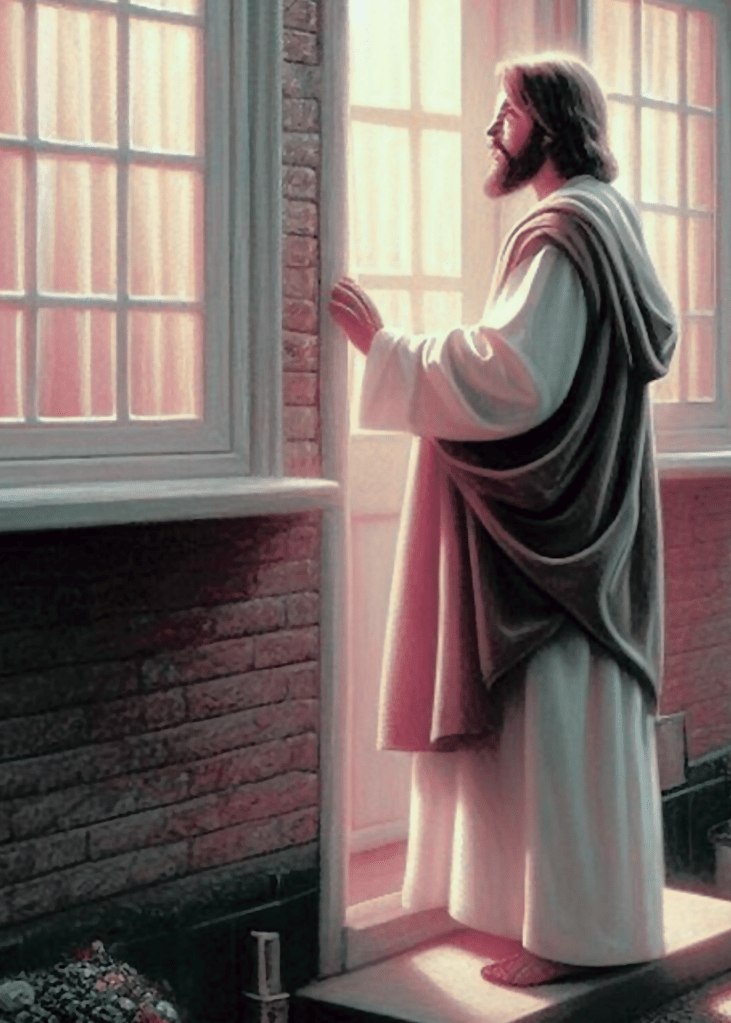
Here I am! I stand at the door and knock. If anyone hears my voice and opens the door, I will come in and eat with that person, and they with me (Revelation 3:20 NIV).

Silently, he stands in the freezing cold, his knuckles raw and bleeding. His knocks are gentle and persistent, barely audible above the noise of the world. He could knock louder. He could pound the door down, barge in, and make his presence known. But he never will.

Trouble lies behind the door, hidden from the outside world: broken hearts, shattered dreams, pillows drenched with tears. Love once built on trust has been betrayed. Forgiveness is consumed in the flames of anger and rage. Peace, joy, and happiness have shriveled and died in the arms of grief. Hope has been swallowed by the darkness of despair.

Knock, knock.

So gentle. So persistent. His tender voice pleading, desperate, his heart broken and crushed by grief. His perfect, blameless body is deeply scarred, bearing the stripes of atonement for a world lost in sin. A world tricked by the evil one, the father of all lies, the prince of darkness, the silent killer of the soul.

Knock, knock.

Who’s There?

Jesus.

Jesus who?

Jesus Christ, the Son of the true and living God.

What do you want?

I want you to open the door and invite me in.

Why?

Because I want to heal your battered, bleeding soul. I want to forgive your wayward, rebellious heart from sin, guilt, and shame. I want to wash your heart clean and fill it with joy, peace, and happiness. I want to show you how much I love you. I want to release Satan’s murderous grip. I want to set you free and give you eternal life.

Knock, knock.

I created you. I breathed into your nostrils the breath of life. You are my masterpiece. You belong to me, but the evil one snatched you from my hands to devour your soul. Unless you open the door and invite me in, I won’t be able to help you. I can’t make you believe in me. I can’t give you everlasting life without the forgiveness of sin. The choice is all yours.

Knock, knock.

The clock is ticking. Don’t delay. Death is crouching at your door. The choice is yours; life and death are in your hands.

For the wages of sin is death, but the gift of God is eternal life in Christ Jesus our Lord (Romans 6:23).